Relevance Beats Fame: Inside the Podcast Host Perspective Study


 Apple Podcasts

 Spotify

 YouTube
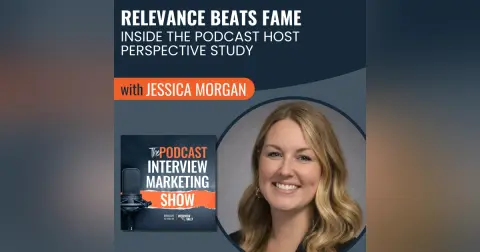
Most podcast guesting advice comes from the guest side. This conversation looks at it from the host's side. Jessica Morgan, COO of Interview Valet, shares findings from Interview Valet’s Podcast Host Perspective Study, where hosts explain what earns a yes and what gets deleted.
The headline is simple: relevance beats fame. Hosts want guests who fit their audience, not guests with the biggest following. The data also shows the cost of guest pollution. 63% of hosts say a quarter or more of the pitches they receive are junk. With Tom Schwab, Jessica explains why the first two sentences of an introduction matter most. She also shows why the interview is the start of a relationship, not the finish line.
Timestamps From This Episode:
[00:32] Why we wanted to hear from podcast hosts, not guests
[06:22] What a well-fit introduction looks like in practice
[10:55] Spray and pray. The real cost of junk pitches
[16:27] Reciprocity. The interview is the start, not the finish
[22:13] Hosting as invisible labor and what hosts wish guests knew
Resources From This Episode:
substack.com/@PodcastInterviewMarketing
offers.InterviewValet.com/sopg
Looking For More?
Here are some resources to help you get started with a Podcast Interview Marketing strategy to grow your brand or business.
 |  |  |
Jessica Morgan (00:00): Listen, the host is expecting you to promote. You want to be a gracious guest. You want to be invited back. You have a responsibility as well. When you say yes to this invitation, you have a responsibility to ensure that you're promoting it, ensure that you're doing what you say you're going to do and providing value to that audience. Welcome to the Podcast Interview Marketing show, where we explore big ideas with leading experts on how to grow your brand and business with targeted podcast interviews.
Tom Schwab (00:32): Everyone's got an opinion, but when you've got data, well, then you can make better decisions. And that's exactly what we're doing today. For years, most of the advice around podcast guesting has come from the guest side. How to get booked, how to tell your story, how to promote yourself. But there's another person in this relationship, and their opinion matters a whole lot. It's the podcast host. So we asked them, what makes them say yes to a guess? What makes them hit delete? What makes an introduction feel personal instead of another piece of guest pollution that's just cluttering their inbox? Jessica Morgan, our chief operating officer here at Interview Valet, led a recent study. It was the Podcast Host Perspective Study. She's here to share the results and some of the findings.
Tom Schwab (01:26): They're going to challenge how you approach podcast interviews. Here's the big one. Relevance beats fame. Hosts aren't looking for the person with the biggest following. They're looking for the person who can bring the most value to their specific audience. If you want better interviews, stronger relationships, more referrals, and ultimately better business results, start by seeing the entire process through the host's eye. Because getting booked is not the goal. Building trust is. Let's get into it. Well, you know, everybody's got an opinion, but when you've got data, you can really make some decisions based on it. And today we've got Jessica with us. And Jessica, I'm so excited that we're starting off this whole our substack with the Podcast Interview Marketing brief where we show data each week on different things.
Tom Schwab (02:26): And I wanted to ask you the first question of why did you think of let's ask the podcast host first as opposed to just writing another one on a guide from what we know, Absolutely.
Jessica Morgan (02:41): We were talking about. The industry has plenty of guest side advice. If we really want to be reaching hosts, we need to reach out to hosts and see what they truly want. None of that, those studies ask hosts, what are you looking for in an introduction? What are you looking for in a guest? What's most important to you. And so it was something that kind of was dreamed up back in May. And then finally we were able to bring it to fruition, which was super exciting. We sit between guests and hosts so much that it's, this is kind of a data backed version of what we're already seeing and we're already talking with hosts and all of that.
Jessica Morgan (03:21): So it's kind of anecdotally we're able to kind of put this just really into a package that we can send out to everybody of what we're already seeing. So it's just really reframing the whole experience. I think this is not tactics for guests. This is the host experience.
Tom Schwab (03:37): And it's like you can sort of infer it from what we see and we know it per host when we talk with them. We're not sharing that with their everyone, but we'll share the roll up on everything. And before we jump into the findings, was there anything that surprised you most in the data?
Jessica Morgan (03:54): Yes, I would say the number one thing is the, the gap between relevance to a host audience and the celebrity factor. So I think a lot of times people are leading with, and we'll get to that later on, but leading with the, this is, this is who this person is or this is why they're, they're so, you know, they have so many followers. If they're not relevant to the host audience, they don't care. Another one was that 75% of hosts recognize the generic, the pitch problem that's out there with all the robotic pitches and we call it guest pollution. They recognized that term and they definitely, they, you know, they felt that it was something that was, that they were experiencing themselves. And it's definitely something that they felt was impacting their, their journey as a podcast host.
Tom Schwab (04:42): Yeah, so I know what you're talking about here. And you know, you mentioned that the data shows that the audience fit. That's what's important. Even more than fame. And I can think of, you know, we get pitches for our podcast. Heck, I got pitches before we had a podcast. And there's one that I will always remember that their whole pitch was this person was famous because they were on television in the 1990s. And I'm like, sorry, I was young, I was at sea, I was working, I didn't watch television that decade. So it's like, why do you think just because you were on television in the 1990s, that now you should be on everybody's podcast? Why do you think that guests and agencies still like lead with these credentials instead of the audience fit.
Jessica Morgan (05:34): I think it's the wow factor. People are like, look at this person. They're really well known. So if you get on their or if they get on your podcast, then you're able to use that as your kind of your authority factor or your credibility factor. But I really don't think that's the way it is in podcasting. They're looking for the relevance because they want to make sure that you're providing nuggets that their audience needs and wants so that they're going to stay tuned in. They're not just going to turn it off. They're going to stay tuned in to listen. They're not going to listen to John Smith who was on Days of our lives in 1990. That has nothing to do with their life. They want to stay tuned in to how.
Jessica Morgan (06:15): What is my pain and how can you solve my pain problem? I don't care if you are a celebrity. How can you help me?
Tom Schwab (06:22): I think some times it can be lazy too. Right. How do I introduce this person? I'll just tell how many social media followers they have, you know, and it's like, I don't really, really care how many bots you have. You know that you can't have a discussion about that. Right. So what does a genuinely well, well thought out pitch or introduction look like in practice? One that opposed to what you call the, the guest pollution where it's just, just making noise and, and sending spam.
Jessica Morgan (06:57): Absolutely. Bat. I'm going to jump back, Tom. I do have to mention every time you say the word pinch pitch, I kind of cringe a little bit. We at Interview Valet do not use that word. We're using that word a lot in this study because that is an industry word. It was getting confusing if we said introduction and clients were like. Or the hosts were like, what are you talking about? So that's why we're using the word pitch. But here at Interview Valet, you pitch a baseball, not a person. So we are, you know, you can pitch the fit, not the individual, I think is what is going back to kind of that relevance.
Jessica Morgan (07:33): But as far as a genuinely well fit introduction, I'll say, or pitch, if we want to say it, that it's naming past episodes that maybe the client has been on or the, the guest has been on that fits with that show's stated mission. Talking about what the show is, their mission is, what their whole goal and point of their podcast is and why this can help help push that mission forward. I also think it's, you know, contrasting to just a, this person would be a great guest. It's, why is this person a great guest? Are they a good guest? Because, and I'm trying to think of a good example, but it's, you know, maybe your listeners are agency owners who are struggling to, to really grow in this day and age.
Jessica Morgan (08:23): They're struggling to stand out amongst people, thousands of other agencies and such. What can they do to get ahead? Well, let me introduce you to Tom Schwab. Tom Schwab is a founder and chief evangelist, officer of Interview Valet. Here's how he can help your, your listeners stand out. So knowing what the host's mission is, what the show's mission is, what that audience is, and then just really showing your genuine real research besides just, hey, they love to be on your show. Like it kind of feels more transactional, less relationship based. And so that's why we have our research strategists on our team that they go in and they find true fit for the show. We know if a show tells us this is who my ideal guest is, they're not getting somebody that isn't a true fit.
Jessica Morgan (09:13): And maybe, you know, plans change, shows pivot, all of that. And that's why we have our database that we're keeping notes down, making sure that we're introducing a person. We might pitch the, you know, the relevance, but we're introducing a person and how that would fit. And so I think that's really, that's what's missing from a lot of hosts inbox these days.
Tom Schwab (09:31): Yeah. And to me it's like the fit help me connect the dots. And I see this in so many emails there where you just start skimming it and it's like, what is your point? Why should I, why should I even care? So if you can show that fit, that relevance from the very beginning, now I'm interested in the other things, but if you make me work for it, I'm probably not going to. Right. You think of all of the pitches, the emails that hosts get. If you don't make it easy for them to say yes, they're going to say no, or worse yet, ignore you or block you.
Jessica Morgan (10:09): To your point, I actually had a host email me directly after I sent out the study and he said, I'm going to make this real easy for you. I what I'm looking for, I want somebody. You have 30 seconds, not even 30, 10 seconds to make it a heck yes or no. I don't want to read paragraphs and paragraphs. The first Two sentences will tell me if it's a fit. That's it. That's what I want. Very quick, very to the point, make it. See if it's a fit. I don't need their credentials. I just want to know if it makes my. If it's, if it's relevant to my audience. And so that was something where it's actually a host that we, we know very well.
Jessica Morgan (10:43): And so I was like, told our team, like, you have 10 seconds, two sentences to make this worthwhile for that host. So, yeah, it's definitely. That's what they, they're wanting to know, and they want it directly.
Tom Schwab (10:55): And it's, it's really. And it's really bad when they start referring to the pitches or your emails as junk. And I was really surprised that 63% of hosts said that a quarter or more of the pitches they get are junk. And I am always, always amazed sometimes when I see hosts start posting them on social media on how bad they are. It's like, first do no harm, right? You're getting embarrassed by what you pitched or your agency pitched. So what do you think is really driving that volume of junk?
Jessica Morgan (11:34): I would say it's spray and spray and pray. I can't even say that. That's what we say a lot. They are PR firms and maybe other agencies, those quickbookers, the booking agents, if you will, the booking agencies that'll get you on 500 podcasts in a year or whatever it is. They're treating podcasts like press lists. They're literally just massively sending emails. They're all robotic emails that are not anything about the hosts and the show. It's just about that guest and exactly their credentials. And so the hosts are deleting them. They're not, they're not a fit for me. We're moving on. And so having a personalized introduction, that's what makes it not junk, right? The spray and pray guest pollution is what we keep saying.
Jessica Morgan (12:18): And like I said before, the 75% of hosts are recognizing that problem. They're getting, you know, upwards of 20, 20 introductions or pitches in their inbox a week. And it's. They don't have time to filter through them. It's not worth their time. And so it's something where we talk a lot about positioning as a magnet, not a megaphone, and making sure that we're targeting based on fit and relevance instead of just massive outreach. We're not just sending hundreds and hundreds of emails and hoping we get back a couple that are maybe not Even a fit. But we're just spraying and praying. Okay, well, I'm buy a lot of junk.
Tom Schwab (12:56): I'm going to push back on this and just say it's a numbers game. Right. I've got this AI program now, or I signed up for this thing and it will help me pitch myself to 50,000 top 1% podcasts. Right. Even though there's only a hundred thousand podcasts that take guests. I don't know how 50,000 could be in the top 1%, but it will let me do this. And all I've got to do is hit a button or something like that. It's a numbers game, right? So so many people may, may delete me, may not respond, but what about those few that do? What's the cost to the agency or the guests of doing the spray and pray? Is there a downside to it?
Jessica Morgan (13:42): Absolutely. I mean, if you think about it, your hosts are stopping reading past that first line. Trust is eroding, especially for the repeat offenders that are constantly, especially agencies. Your trust is, is lost there, and there's a reputation risk there. I feel like just if you're known for constantly just sending stuff, spam, if you will, to host constantly. And I know there are a lot of services out there where you're able to go out there and just say, hey, send, you know, 100 introductions, all of that, again, it's leading with your credentials and all of that, which is what hosts don't want. It's just shoving your. Inserting yourself into the, their, say, their living room where they don't want you.
Jessica Morgan (14:24): And actually, I was talking just yesterday with a client of ours, great guy, and he, his whole thing with marketing and with pr, all of that is disruption is dead. You need to gain trust. You need to get in that room. Disruption. Marketing doesn't work anymore. You don't, people don't want you inserting yourself into their conversation and they're like, why are you here? And that's exactly, I think what's happening with these that they're sending out.
Tom Schwab (14:49): It's.
Jessica Morgan (14:49): It's costing the guest and the agency that, that reputation. Essentially. They're losing that trust of they're not being where their audience is and gaining trust and just getting that welcome, that relationship, because that's the podcasting is a relationship. Right. They're not getting the relationship to say, hey, I want you on my show. I think this is going to be great. They're right there. I see your name, I'm deleting it. I, I get that for a Lot of, not even podcast hosts, but just spam emails I get, I'm like, I recognize the name, I'm deleting it.
Tom Schwab (15:19): And so, yeah, and what some people don't realize is that there are worse things than deleting the email because if they market spam, there is a sender score associated with every domain. And some of these, well, that's why the tools out there that will let you spam all the podcast hosts, they make you use your own domain because they don't want you destroying theirs. So if too many people mark your, your email as spam, what happens is Google all the other email providers, if you fall below a certain level, they won't pass anything on, they'll just put it in junk. So all of a sudden you could make your email so bad that your clients can't get your emails, your team members can't.
Tom Schwab (16:10): Heck, you could send an email to your mom and it would, would not go to her because you've got so much spam reported.
Jessica Morgan (16:17): Absolutely. I guess I'm thinking of kind of qualitative cost. But that right there, that's definitely quantitative costs. Right. And so that's a huge cost.
Tom Schwab (16:27): Now let's talk about reciprocity. Right. When you're on a podcast, right, the host is doing you a service by introducing them to your, your, their audience. Right. And they're expecting you to bring great content. But there's more that they expect the guests to do. Can you unpack that a little bit of what the data says that the hosts want the guests to do?
Jessica Morgan (16:56): Absolutely. I will say I think it goes back to being a gracious guest. And unfortunately it's something even some of our clients, we have to be like, you need to be a gracious guest. Right. The host is doing you a favor. And, and we have some clients still that are like, I'm doing them a favor for being on their show. It's a relationship based thing. That's absolutely not, not true at all. I think a lot of guests still treat the interview as the finish line. Right. They view the appearance as a deliverable rather than the start of a relationship, which that's absolutely what it is. It's the start of a relationship where down the road they could refer clients to you, they might bring you up on an episode six months later.
Jessica Morgan (17:36): All of that. I, there was one host that said, and this surprised me, not surprised me across the board, but surprised me a little bit as far as if it were our clients that she puts effort into publishing the episode, posting to LinkedIn sending a summary to their email list. And every guest will say, I'll do the same thing. I promise I'll share with my audience, I'll publish or I'll do some promotional repurposing. And then about half will comment on the LinkedIn. And she rarely sees a guest post independently about the episode. That right there would leave a host feeling used. And I feel like it's not. They're viewing that as, as the finish line where that is just the start, that is not the deliverable, it is the very start.
Jessica Morgan (18:25): Then you do the repurposing, you do the promoting, you do all of that. And it's promotion is not a favor to the hosts. It protects your future as a podcast guest. Because podcasting is a very small world. So it's very possible that so and so knows so and so. And they'd say don't have them on because they didn't do anything. They said they would do this and they felt they fell off the face of the planet afterwards. And so we really need to think about, you know, building those promotional commitments into guests own accountability. We also need to make sure that we're thinking about long term value and long term relationship. I know 34% of the hosts said return appearances or referrals were a top win for them.
Jessica Morgan (19:09): And so that is what we need to think about. This is not the deliverable, this is the very start of a relationship. And so that is something we do with our clients. We put, if they're committed to repurposing and promoting. That's right there on their one sheet. That's something we follow, our strategists follow up with making sure that they're doing it and they're keeping up those standards. Because it's like you said about reciprocity. I mean, why would I have you on if you think that you're doing me a favor, which you're not. It's definitely the start of a relationship.
Tom Schwab (19:38): Is what I was saying. I see so many people don't realize the harm they're doing with that. Right. If you tell the host that you're going to promote it and you don't, you just broke trust with that. They're probably not going to recommend you to other podcasters or I can even think of one time where we had a client come to us, they'd worked with another partner that told him it was all about, you know, get out on as many shows as you can and just tell your story. In a matter of six months, they had ruined their entire Chances with the podcasting ecosystem because they had such a bad reputation, they would show up for the podcast interview, make all kinds of claims, and then they would ghost the host afterwards.
Tom Schwab (20:23): And they were actually getting a reputation out there. And we said, there is no way that we can represent you because you know, of what you have done, what you said you were going to do, and then you broke trust there. So if you're looking to do this long term, if you want podcast hosts to be referral partners, if you want them to be the opportunity to get you back or one of your team members back, you know, if you believe that they hold the audience, why wouldn't you want to have that relationship with them?
Jessica Morgan (20:54): Absolutely, yeah. I mean, we have to say it's a show is a great fit. They're now a recurring guest on there. Right. Every six months, a guest on the podcast. And it's something where it's become a great funnel, if you will, that it's filtering guests or the listeners right into their reaching out to the guests, all of that. And it's such a great relationship that they've built because not only did the does the host see the fit, the guest sees the fit, and that the host is able to say, listen, this guest, I can keep inviting them back because they're doing the promoting, they're providing value, they're repurposing it, they're. They're viewing this as a relationship, not just a one sided. The host doesn't feel used.
Jessica Morgan (21:35): And that's honestly, I think what it is is the host feels like they're taken advantage of.
Tom Schwab (21:39): Yeah. And Jessica, I love how you set up the study because there's so many studies where it's like, you know, just multiple choice. Right. 1 Through 5, 1 through 10, whatever is that's interesting. But I really want to know what people think. And I love how you did the open ended responses. And one of them was what people? What the hosts wish that people would understand. Can you share some of those? Because I think there was some great feedback in there, but then there was a theme that was overarching with those.
Jessica Morgan (22:13): Absolutely. I think the overarching theme is that hosting is invisible labor. They're doing the pre and post production, they're researching, they're doing coordinating, they're taking time out of their busy schedules. They're. And what I think a lot of people, a lot of guests don't understand is these people, these hosts, nine times out of 10, they're not doing it as their day job. They aren't making Millions from a podcast like, say, Joe Rogan, they're doing it on the side. They're taking time out of their busy schedules, their businesses, to make sure that they are providing value to their listeners. And so it is invisible labor. They're not getting paid for this, all of that. Sometimes they might ask $50 to help with production costs or something, but it's an invisible labor.
Jessica Morgan (22:54): Their time is valuable when their time isn't respected. I know hosts get very frustrated when they're not respected. If there's a last minute cancellation, all of that, that is where I felt we saw the results, where hosts get very frustrated when they don't feel respected. Another one was that no is a fit decision. It's not a rejection of the person or the guest as a person. It's just, it's rejection based on fit for their audience or if it's a fit for their theme. Right now, I'm gonna read straight from here. One guest or one host. Excuse me, that what they said. They wish it stood out to me, but they said, I wish brands, authors and potential guests understood that podcasting is a relationship, not just a promotional stop.
Jessica Morgan (23:44): The best pitches show that you understand my show and can bring genuine value to the people listening, not simply something you want to sell, which, that's another thing I think people get on there looking to say, hey, I'm, you know, I can sell my, my supplements or I can sell my course on here. And it, it's, it's not treated as a conversation. It's treated as a one stop promotional. I get to just talk about my course and they're going to say yes. Where you're not building that trust. You're honestly, you're sounding like an infomercial and the host doesn't want that and the listeners don't want it.
Tom Schwab (24:16): You're probably destroying the trust on that. Yeah, yeah. So based on the whole study there, you've, you've looked at it, you've looked at all the numbers. You're probably the expert in the study right now. If somebody said, I'm looking to pitch myself or pitch one of my clients, what was the one thing that you would tell them? Based on the data, what's the one thing that they should change?
Jessica Morgan (24:44): Oh, I don't know if I can narrow it to one, because I think we're doing a lot of things wrong in the industry. First I would say, though, lead with fit, not credentials. In the first two sentences, you have the ability for the host to say, heck, yes or no. And so I would make sure that we are. Like I said, you have that 10 seconds, 30 seconds, the first two sentences. So ensure that you are showing that you've done a little research. Ensure that they're actually. The host actually does have a podcast because I get introductions. I don't have a podcast. But show that there is a fit. There is a. That you've done your research. Make sure that you're keeping them short.
Jessica Morgan (25:21): Hosts are busy bullet pointing them, keeping it so they can just quick skim it and go. Yep, if it's a ton of content like you said, you're not going to read it. It's going right into the junk pile. And if you're not personalizing it, a copy paste is the fastest way to get into the junk pile, to get into the reject pile. I've had ones that say hi first name and I know they didn't send that to me. It was a copy paste that I'm not even reading past the first, first three words because I know that that's not personalized to me at all. They have not taken any time, so why would I take my time? So I think those are probably. I know that was a couple.
Jessica Morgan (26:02): But my gosh, personalization and leading with fit I think is the biggest things that we, the industry needs to change around.
Tom Schwab (26:09): I agree with you. It's like get the first three sentences right and then you got a chance on the rest of it because most people don't get the first sentence right. I think of Joe Saul Sehy from Stacking Benjamins. He posted something on LinkedIn and he was nice. He gave us a shout out that we were doing it right, but he was showing different images of pitches that he got and you could tell that they were being done by AI and it was really dear Joe, dear Jos, dear Stacking, dear Benjamin's, dear Cumulus Media. And it's like, if you don't even know his name, why would you want to be on the podcast? And he just looks at those and those get marked as spam. Absolutely.
Jessica Morgan (27:02): I mean, they're scraping. That's all they're doing. They're scraping for email addresses and just spraying and praying that they get a response back. And so, and I would be willing to bet they've received some responses, but they probably weren't very friendly.
Tom Schwab (27:15): So they also got famous on LinkedIn because that is like, what a top 0.01% podcast. He's got a whole lot of followers. Heck, he's on radio simulcast there. I wouldn't want him saying Something bad about me. So let's look at it from behind the curtain here. How do you think this study is going to change how we at Interview Valet, how we operate and how we.
Jessica Morgan (27:46): Advise our clients, reinforcing our main philosophy and mission here of making sure that we're doing the vetting and we're doing the research behind the scenes before we send an introduction. It's also, I know for some when we will send a personalized introduction, I will say we do have, like a short bio, and then we have some stuff and also how it fits. But maybe the fit is not in those first two sentences. So I've definitely advised everyone, you have those first two sentences to say why this is a fit and why the host should keep reading. And so that's. That's changed more. So it's always been personalized introductions, but it may have been longer than the host wanted. And so we've kind of shortened those up a little bit.
Jessica Morgan (28:27): It's also giving data that we can show our clients saying, listen, the host is expecting you to promote. You want to be a gracious guest. You want to be invited back. You have a responsibility as well. When you say yes to this invitation. You have a responsibility to ensure that you're promoting it, ensure that you're doing what you say you're going to do, providing value to that audience. And so it's really something that we can say, look, this is what the hosts have said, not just us screaming from the rooftops, because I feel like I could. It's coming from the hosts, and they're saying, this is what we want from you.
Jessica Morgan (29:00): So those are, I think, the two major things we're doing and ensuring that we have stuff we can point back to on the host side. And I'm sure we would love to keep, you know, doing a host study in the future as well. And it'll keep. We'll keep evolving and innovating, and I.
Tom Schwab (29:14): Would encourage other people, build on this, ask more hosts, share the data, put it out there. That's how we're going to get better. Right? There's an old joke about everybody's got an opinion. I won't go into that because we're not an explicit podcast. But this idea of we've got to make decisions based on better data, and too many people are making it on datum, right? The singular of data. And just because you had one experience or asked one person, that's interesting, but that's not data. So what we're trying to do here is share all the data so that we can all make better decisions, we can make better actions and really we can help podcasting be the medium that it is possible to be.
Tom Schwab (30:00): So, Jessica, where can people find the study and is there any follow up planned around this?
Jessica Morgan (30:04): For sure. So we actually have released it on substack and so you'll be able to see the substack link in the notes. That is where we're going to be posting all. It's not going to be. We're not treating it as a blog, we're treating it as our data source. So as Tom mentioned earlier, that's where we are putting all of our data, all of our research, everything there. So that's, there's a ton of really good nuggets on there. I also will be sharing it on my LinkedIn and interview Valet's LinkedIn.
Jessica Morgan (30:29): And then as far as a follow up, yes, I can't tell you exactly what that's going to be yet because I want to see the feedback that we get from this host study and then really just see what, what our listeners and what agencies are wanting. And if that's something where, you know, people are like, I want to know, the guests want to know maybe some format specific findings or agency specific findings, that's where we can go out, we reach out to different agencies or we do something. I'm not sure. There's so many potential options and so I'm sure you already have something cooking in your brain, Tom, but there's definitely going to be a deeper dive in the future.
Tom Schwab (31:04): Well, the state of podcast guesting study that we have done, I think this will be your number nine or ten, right? We started out that the first year and then people asked us the second year, are you going to do that again? I could see doing this study to see how things are changing and a little bit behind the curtains. This is the first time you've heard us talking about substack. It's like, why are you guys on substack? Well, we realize that when we're talking, we're not only talking to ideal clients, but the AI that refers them. And so when we're putting things up, we don't want to just put it on LinkedIn because LinkedIn doesn't like AI scraping it. I'm not vain enough to think that AI looks at our website first.
Tom Schwab (31:48): So we want to put it on a place where you can find it, but also AI can find it. So definitely check out the substack.
Jessica Morgan (31:56): It was a pleasure being here and sharing the study. I look forward to sharing little tidbits and kind of things that stand out too, over LinkedIn and on our substack in the future.
Tom Schwab (32:05): Well, Jessica, what's ordinary to you is amazing to others. Thank you so much.
Jessica Morgan (32:10): Thanks, Tom.
Tom Schwab (32:11): If there's one thing I hope you take away from this conversation, it's this podcast interview Marketing is not a numbers game. It's a relationship game. The host isn't some gatekeeper standing between you and an audience. They're the trusted guy who spent years building a relationship with their audience. Treat that trust accordingly. So here's your action step. Pull up that last introduction you sent to a podcast host, or maybe the one the agency sent on your behalf, and read only the first two sentences. Do they immediately explain why you're relevant to that specific audience? Or do they start with your credentials, your books, your accomplishments, your brags, and everything you want? You see, if the host can't connect the dots, you've already made their job way too hard and it's easier just to say no.
Tom Schwab (33:14): Then look at what happened after the interview. Did you promote it? Did you thank the host post? Did you stay connected? Did you even do what you promised? You see, the interview is not the finish line. It's the beginning of a relationship. Lead with fit, deliver value, be a gracious guest, follow through. Do those consistently and you won't just get more interviews, you'll get more from every interview.